ワークショップ概要
本ワークショップは、気候変動という状況を踏まえ、持続可能なモビリティの実現に向けた課題と機会を探ることを目的としています。
ワークショップでは、3名の専門家が、気候変動の文脈における持続可能なモビリティについてそれぞれの視点や知見を共有します。これらの発表を基に、参加者は双方向の議論を通じて、共通の課題を特定し、各地域からの経験やアイデアを交換するとともに、将来の持続可能なモビリティに向けた潜在的な解決策や協働的なアプローチを探ります。
専門家間の知識の共有と議論を通じて、本ワークショップでは、主要な課題と機会に対する共通の理解を深め、より持続可能で、安全かつ強靭なモビリティ社会の形成に貢献することを目指します。
スケジュール(ドラフト)
| 09:00 - 09:15 | Opening, Self introduction |
| 09:15 - 09:55 | Presentations & Discussions, Part 1 |
| 09:55 - 10:35 | Presentations & Discussions, Part 2 |
| 10:35 - 10:50 | Coffee break |
| 10:50 - 11:30 | Presentations & Discussions, Part 3 |
| 11:30 - 12:30 | Discussions, session wrap-up |
登壇者紹介(英語のみ)
Session Organizer
Takashi Oguchi
Professor, Institute of Industrial Science, The University of Tokyo, Japan
Director, Mobility Innovation Alliance Japan
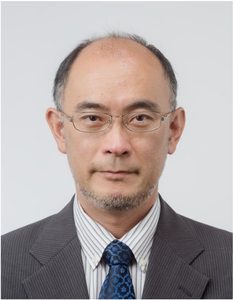
Professor Takashi Oguchi, born in Tokyo in 1964, graduated Department of Civil Engineering, Faculty of Engineering, the University of Tokyo (UTokyo) in 1988 and got Ph.D from Graduate School of Engineering of UTokyo in 1993. After joining to Nissan Motor Co. Ltd., he started his academic career in Tokyo Metropolitan University, and promoted to Professor in 2007. He moved to Institute of Industrial Science (IIS) of UTokyo in 2011. He is in charge of education for the Department of Civil Engineering at UTokyo. He has assigned to Director of Advanced Mobility Research Center (ITS Center) of IIS, UTokyo, from 2018 to 2025, and is serving as a Deputy Director of IIS, UTokyo in 2024. He is also a member of Mobility Innovation Collaborative Research Center (UTmobI) at UTokyo started in July 2018 and serving as a Director of UTmobI from 2025. He is also adjunct Project Professor both in Social Cooperation Program on "Data informed Transit and Urban Management" in UTmobI from April 2024 and Social Cooperation Program on "Urban Surface Street Management for Smart Mobility" in IIS from October 2024. His major research field is Traffic Engineering, Traffic Management and Control including advanced traffic signal control, advanced highway network traffic management systems, integrated transport and mobility system design including utilization of automated vehicle technology, harmonized design of infrastructure facilities and hierarchical road transport system. He also contributed to the Japanese national project SIP-adus (Cross-Ministerial Strategic Innovation Promotion Program in the Innovation of Automated Driving for Universal Services) from 2016 to 2023.
Manabu Umeda
Collaborative Research Coordinator, Mobility Innovation Alliance Japan, Japan
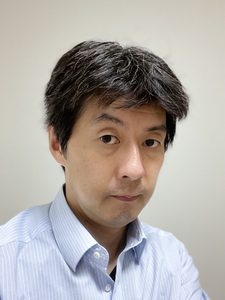
Manabu Umeda is a project researcher at Mobility Innovation Collaborative Research Organization, the University of Tokyo (UTmobI). He is also appointed as a Collaborative research coordinator in Mobility Innovation Alliance Japan since Jan. 2024.
He has many years of experience in safety performance development at an automotive company, where he has played a key role in developing vehicle safety technologies, and holds extensive expertise and deep insight in the field of automotive safety.
Since he joined the University of Tokyo in November 2019, he has contributed to promoting international collaboration activities regarding automated driving research fields. He was appointed as a Collaborative research coordinator in SIP-adus (the Cross-ministerial Strategic Innovation Promotion Program (SIP), Automated Driving for Universal Services) steering committee in Japan from Jan. 2020 to March 2023. And he is currently working for SIP, Development of Smart Mobility Platform to promote international collaboration. He serves as an Advisory Board Member for several European research projects, including the CCAMbassador, SENSEI, and Roads4All.
Speakers
Bart van Arem
Full professor of Transport Modelling and Pro Vice Rector for Doctoral Affairs, Delft University of Technology, The Netherlands
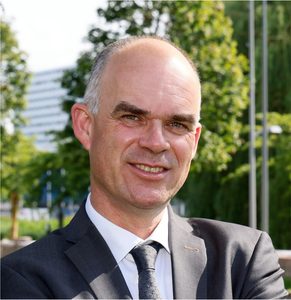
Prof Dr Ir Bart van Arem was appointed as full professor Transport Modelling at the department of Transport and Planning in 2009 and serves as Pro Vice Rector for Doctoral Affairs of TU Delft since 2021. He was head of the department Transport & Planning from 2010 till 2017 and served as director of the TU Delft Transport Institute from 2012-2021.
As Pro Vice Rector for Doctoral Affairs of TU Delft, he is responsible for the appointment of supervisors and co-supervisors, the installation of doctoral committees and the processing of cum laude proposals and requests to obtain the ius promovendi. He is also responsible for adapting the PhD rules and regulations to possible changes in the Dutch Higher Education and Research Act. He is responsible for the proceedings during doctoral examinations and formally appoints the chairs of doctoral committees
His research focuses on analysing and modelling the implications of intelligent transportation systems, such as automated, electric and shared vehicles. Such implications may vary from changes in driving and travel behaviour, traffic flows in networks and modal change, road and IT infrastructure and the spatial design of urban regions. His research has a strong modelling and simulation component based on empirics wherever possible and always with users of the research in the back of his mind.
In 2026, he received a royal decoration for his contributions to science and society as Officer in the order of Oranje-Nassau.
Yudai Honma
Associate Professor, Institute of Industrial Science (IIS), The University of Tokyo; Deputy Director, Harmonic Mobility Research Center, IIS, The University of Tokyo, Japan
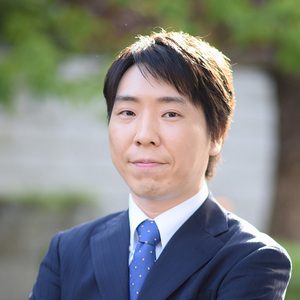
Yudai Honma is an Associate Professor at the Institute of Industrial Science (IIS), The University of Tokyo, and Deputy Director of the IIS Harmonic Mobility Research Center. He is also Director (UTokyo side) of the DENSO-UTokyo Lab, a ten-year, university-wide partnership with DENSO.
His field is mathematical optimization for urban and architectural planning, focusing on the interaction between facility location and human movement. He applies this approach to the optimal location of infrastructure for decarbonized road transport, from hydrogen and electric vehicle (EV) charging stations to dynamic wireless power transfer (DWPT) on city streets and expressways. In a case study of Kawagoe City, electrifying only about 1.5% of total road length could let EVs travel without stopping to charge and with much smaller batteries, which would cut emissions from battery production. He has published in journals such as Transportation Research Part C, Transportmetrica A, Networks and Spatial Economics, Transportation Research Today, and the International Journal of Hydrogen Energy.
He has collaborated with Arizona State University since 2017 and conducted joint DWPT research at the E|Road Center of FAU and Fraunhofer IISB in Germany. He was a keynote speaker at IEEE WPTCE 2024. He is a member of the TRB Standing Committee on Mobility Management (AEP14) and a Paper Review Coordinator for the TRB Annual Meeting 2027. He has also worked on Japan’s Science, Technology and Innovation Basic Plans at the Ministry of Education, Culture, Sports, Science and Technology and the Ministry of Foreign Affairs, and is the lead author of two Science-Policy Briefs for the UN STI Forum.
Gregory Trencher
Associate Professor, Graduate School of Global Environmental Studies, Kyoto University, Japan

Gregory Trencher is an associate professor at the Graduate School of Global Environmental Studies at Kyoto University in Japan. He obtained his Ph.D. from the University of Tokyo in 2014 and held previous posts at Clark University in the USA and Tohoku University in Japan. His research focuses on decarbonisation and energy policy and the governance of energy and mobility transitions. Current projects are investigating topics such as fossil-fuel phase-out and decarbonisation policies, next-generation mobility, company decarbonisation and electrification behaviour and voluntary carbon markets. He serves on the editorial board for Energy Research & Social Science and as an editor for Frontiers in Sustainable Cities. His research has been published in journals such as Nature, Nature Communications, One Earth, Environmental Research Letters, PLOS One, Climatic Change and Technological Forecasting and Social Change. His research and opinion have featured in media outlets such as The Guardian, New York Times, Le Monde, Nikkei Asia, Channel NewsAsia (CNA), ABC Australia and Carbon Brief.