セッション概要
"Co-creating Life-centric Mobility for Tomorrow"というテーマの下、共創により将来のモビリティがもたらす価値について、Equity(社会的公平性)やDisability(障がい者の移動)、マイクロモビリティの活用といった様々な観点から議論する。
登壇者紹介(英語のみ)
Moderator
Manabu Umeda
Collaborative Research Coordinator, Mobility Innovation Alliance Japan, Japan
Speakers
Asuka Ito
International Advisory Board Member, SIP "Development of Smart Mobility Platform", Japan
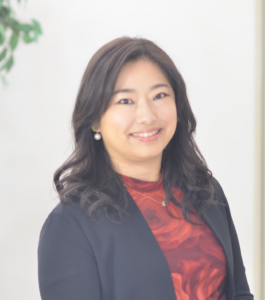
Asuka studied cultural anthropology of the Spanish-speaking world and urban planning at Sophia University, spending a period abroad at Tecnológico de Monterrey in Mexico. There, she became captivated by Latin America's intersection of indigenous values and Western philosophy—an experience that would define the trajectory of her career.
She began her professional life at Nissan Motor's headquarters, overseeing the automotive supply chain across Latin America and gaining hands-on knowledge of the industry from factory floor to dealership. The Great East Japan Earthquake deepened her interest in public policy, leading her to earn a Master's in Diplomacy (Climate Change and Energy Policy) from a graduate school of the University of London. A speech she delivered at the United Nations during her studies opened the door to a role as an international civil servant at the OECD, where she coordinated cooperation between OECD and ASEAN countries.
She later moved to the International Transport Forum (ITF), the OECD's transport policy body covering road, sea, and air. There she moderated smart mobility discussions at the G20 Digital Economy meetings and authored numerous policy reports on autonomous driving, MaaS, road safety, and decarbonization.
At FIA headquarters, she was hired as the organization's only Japanese staff member, leading sustainability and diversity & inclusion initiatives across 252 member automobile clubs and federations worldwide—driving change through motorsport, from sustainable F1 spectator experiences to Formula E's expansion across Asia.
She currently serves on the International Advisory Board for Japan's Cabinet Office SIP Smart Mobility Platform initiative, and practices Ohara-school ikebana, bringing its aesthetic of spatial harmony to mobility system design.
Habib Shamskhou
CEO, President, Advanced Mobility Group, USA
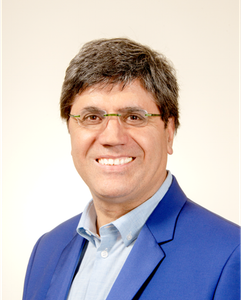
Habib Shamskhou is CEO and President of Advanced Mobility Group and co-founder of the GoMentum Station Connected and Autonomous Vehicles Test Facility in Northern California. He brings 35 years of experience managing a wide variety of transportation innovative projects. Habib is a recognized authority on new mobility options, emerging advanced transportation and digital infrastructure technologies with expertise in technology facilitation, public-private partnerships, and program management of large-scale technology-based infrastructure projects.
His latest collaborations include technology facilitation and program management for two of Contra Costa Transportation Authority’s federal grants from the Advanced Driving Systems (ADS) and Advanced Transportation and Congestion Management Technologies Deployment (ATCMTD) programs. The ADS program is collecting and analyzing data to support federal policy and rulemaking around ADS safety measures. The ATCMTD grant is developing a Mobility as a Service application to provide travelers with multimodal complete trip planning service. Recent developments at GoMentum Station AV proving ground include the Vehicle to Everything Signal Lab (V2X Signal Lab) and Dynamic Personal Micro Transit initiatives and demostration.
Habib has been international speaker on the subject of substantiable transportation, new mobility options, quantum computing impact on new era of next generation mobility, AI-agentic AV , digital transportation infrastructure.
Bart van Arem
Full professor of Transport Modelling and Pro Vice Rector for Doctoral Affairs, Delft University of Technology, The Netherlands
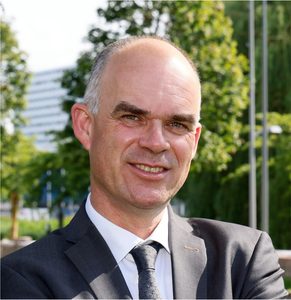
Prof Dr Ir Bart van Arem was appointed as full professor Transport Modelling at the department of Transport and Planning in 2009 and serves as Pro Vice Rector for Doctoral Affairs of TU Delft since 2021. He was head of the department Transport & Planning from 2010 till 2017 and served as director of the TU Delft Transport Institute from 2012-2021.
As Pro Vice Rector for Doctoral Affairs of TU Delft, he is responsible for the appointment of supervisors and co-supervisors, the installation of doctoral committees and the processing of cum laude proposals and requests to obtain the ius promovendi. He is also responsible for adapting the PhD rules and regulations to possible changes in the Dutch Higher Education and Research Act. He is responsible for the proceedings during doctoral examinations and formally appoints the chairs of doctoral committees
His research focuses on analysing and modelling the implications of intelligent transportation systems, such as automated, electric and shared vehicles. Such implications may vary from changes in driving and travel behaviour, traffic flows in networks and modal change, road and IT infrastructure and the spatial design of urban regions. His research has a strong modelling and simulation component based on empirics wherever possible and always with users of the research in the back of his mind.
In 2026, he received a royal decoration for his contributions to science and society as Officer in the order of Oranje-Nassau.
Tawit (Boom) Sangveraphunsiri
Urban Mobility Tech Co.,Ltd. (MuvMi), Thailand
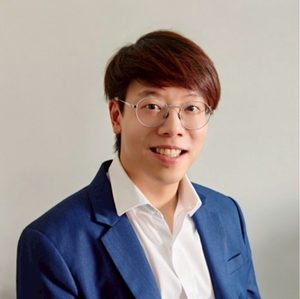
Tawit (Boom) Sangveraphunsiri is an urban mobility professional working to make car-free, livable cities a reality in Thailand and Southeast Asia. He leads the Operations team at MuvMi, a Bangkok-based demand-responsive transit company operating a fleet of 700+ shared electric vehicles that serves over 30,000 daily passengers. He worked on the data infrastructure behind the service — building dashboards and tracking systems to monitor driver utilization and performance, and streamlining agent workflows to help the fleet scale. That data-driven approach contributed to a roughly 30% improvement in driver working-hour efficiency and an increase in passengers served per driver-hour. He has worked with his team on a strategic plan to improve fleet performance, helping move the operation from negative to positive gross profit within nine months, while supporting cross-functional efforts to automate and streamline processes across the company. He also contributes to data-driven transit strategy work with public agencies. He holds a Ph.D. in Civil and Environmental Engineering from UC Berkeley, where his research focused on low-cost, flexible feeder transit for developing countries — work that continues to inform his approach to transit operations today.