Workshop Overview
Automated vehicles will only deliver on their promise if society is ready for them. Who gains, who loses, and who needs to prepare? In this interactive workshop we bring together international perspectives on the societal side of automated vehicle (AV) deployment and turn them into concrete input for a societal readiness framework for connected, cooperative and automated mobility (CCAM). You will hear short talks from research and practice, then take an active part: sharing your own view, discussing in small groups and mapping the opportunities and risks of different AV services, from private cars to robotaxis, public transport and delivery.
What to expect
- Short talks: new evidence on older people and AV branding in Japan, a public transport operator’s view, and what social media reveals about perceived safety in AVs and public transit.
- Interactive workshop: who needs to be ready for AV deployment, and what does readiness mean for them?
- Gainers and losers: a hands-on mapping across AV use cases, and a closing discussion on how to maximise societal benefits for all.
- Open to everyone: no prior expertise in societal research is needed; practitioners, researchers, public authorities and industry are all welcome.
Schedule (Draft)
| 09:00 - 09:15 | Opening | Welcome and first look at what "societal aspects" mean to the room |
| 09:15 - 10:00 | Talks and Q&A | Three short presentations of 10 minutes, each followed by 5 minutes of questions |
| 10:00 - 10:35 | Societal readiness | Introduction to the framework and roundtable discussions on who needs to be ready |
| 10:35 - 11:00 | Coffee break | |
| 11:00 - 11:15 | Report back | Highlights from the tables |
| 11:15 - 11:40 | Gainers and losers | Group mapping across AV use cases |
| 11:40 - 12:00 | Closing discussion | How do we maximize the societal benefits of AV deployment? |
Speakers
Session Organizer
Henriette Cornet
CEO of Urban Innovate, United States
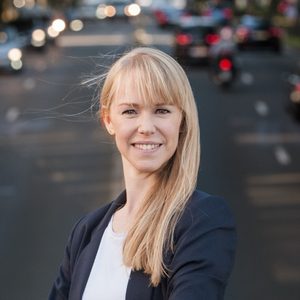
Henriette Cornet, Ph.D., is the Founder and CEO of Urban Innovate and an Adjunct Professor at the University of San Francisco. She holds a Ph.D. in Engineering and Environmental Sciences from the Technical University of Munich and works internationally in the fields of autonomous mobility and sustainable urban transportation.
After five years in the German automotive industry, Dr. Cornet moved into autonomous mobility, working across technology development, human-machine interfaces, inclusive business models, and societal impact. As Principal Investigator at TUMCREATE in Singapore, she led research on autonomous vehicles for dense urban environments. She later coordinated one of Europe’s largest autonomous vehicle deployment projects, involving 70 vehicles across 15 cities, at the International Association of Public Transport (UITP).
Now based in California, Dr. Cornet advises cities, mobility operators, and technology stakeholders on the strategic, regulatory, and societal dimensions of transportation innovation. She developed pulsur™, a social media narrative analysis tool that identifies public attitudes toward emerging technologies. At the University of San Francisco, she co-directs the Autonomous Vehicles and the City Initiative. She also advises the European Commission on autonomous vehicle regulation, contributes to the Mineta Transportation Institute, and serves on the editorial board of Springer’s Lecture Notes in Mobility series.
Ingrid Skogsmo
Senior research leader, VTI (Swedish National Road & Transport Research Institute), Sweden
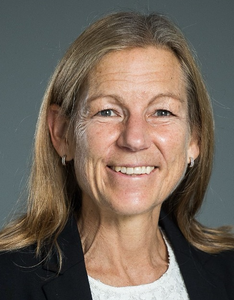
Ingrid Skogsmo is senior research leader for future mobility at VTI, the Swedish National Road and Transport Research Institute. She is member of the Executive Group of the CCAM Partnership (CCAM=Connected, Cooperative and Automated Mobility; www.ccam.eu ), where she leads the work on “Societal Aspects and People Needs”. Ingrid is the President of ECTRI (the European Conference of Transport Research Institutes, www.ectri.org ) and part of the executive management team of Drive Sweden (www.drivesweden.net ).
She is involved in several EU- and national projects related to CCAM, and is for example in the leadership team of the RESKILLING project (Research initiative for Enhancing and Adapting Workforce SKILLs for Implementing TraNsport Automation with Employment Growth) as well as the Societal Aspects Manager of the CCAMbassador project (supporting and engaging stakeholders, and strengthening cooperation between EU member states and international actors).
Her experience includes 25 years in the automotive industry, within positions such as vice president for Corporate Strategy at Volvo Group; Director, Volvo Cars Safety Center and manager positions at Ford Motor Company, Dearborn, USA. Ingrid has furthermore worked as seconded expert for automated driving at the European Commission DG RTD (directorate for research, innovation and development).
Ingrid has a Master of Science from Chalmers, Sweden, where she was awarded a honorary doctorate for pioneering safety work in 2008.
Speakers
Takashi Hikasa
Associate Professor, Faculty of Management and Information Science, Tama University, Japan
Director, Mobility Innovation Alliance Japan

Dr. Takashi Hikasa is an Associate Professor at Tama University and Head of its ELSI Center. He also serves as a Board Director of the MobilityInnovation Alliance. He holds a Ph.D. in Law from Chuo University.•His research focuses on the ethical, legal, and social issues (ELSI) of emerging mobility technologies, including automated vehicles, deliveryrobots, personal mobility vehicles, and humanoid robots. He examines how these technologies can share public spaces with pedestrians andother road users, with particular attention to priority, responsibility, fairness, and cooperation.•He advances an “ELSI-in” approach, translating societal needs and concerns into technical requirements and operational practices from theearly stages of development. His empirical research combines social acceptance surveys, field trials, and behavioral analysis to understandhow experiences with new mobility services influence trust, willingness to use them, and cooperative behavior.•Dr. Hikasa leads research projects supported by the Japan Science and Technology Agency and the Japan Society for the Promotion of Science.His work connects legal and ethical analysis with engineering, public policy, and community engagement, contributing to practical guidancefor inclusive mobility deployment.•As a Japanese expert in ISO/TC 241 Working Group 6, he contributes to international standardization concerning the ethical aspects ofautomated driving, including ISO 39003. His book on social acceptance of Level 4 automated driving received Japan’s Transportation BookAward.•Through collaboration with universities, industry, local governments, and international partners, he seeks to develop governance frameworksthat support safe, equitable, and cooperative mobility in increasingly diverse traffic environments.
Jeroen A. Beukers
Head of Innovation, TPG, Switzerland
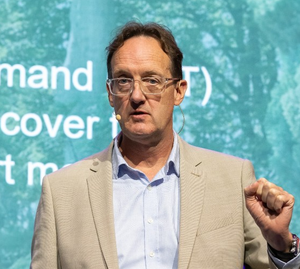
Jeroen is committed to assist in creating a climate of change through radical innovation. Making public transport an accessible, cool and trustworthy experience. Understanding how commuters go through their travel process and imagining the future of sustainable freedom of movement. Testing zero-emission, shared, on-demand, door-2-door, self-driving transportation solutions for people and goods transit. Dedicating time and effort to really analyze, compare, and improve every aspect of mobility and their characteristics.
He currently holds the position of Head of Innovation Automated Driving & Smart Mobility at TPG, the Public Transport Operator in Geneva, Switzerland, where he manages the AV related Horizon Europe AutoTrust, Avenue, CCAMbassador, Chorus, Ultimo, Enflate and Sinnogenes projects as well as the Dynamic Responsive Transport System tpgFlex and the Automated Depot project.
His expertise on autonomous vehicles and understanding of intelligent transport systems enabled him to provide advise on the Swiss Act on L3 and L4 driving. He is a global AV technology scout, vice-chair automated mobility at the International Transport Union- UITP, lecturer, speaker, (co)-author different articles and books on automated mobility as well as member of the Swiss Association for Autonomous Mobility – SAAM and Pave Europe.