Session Overview
This session will discuss how to build an ecosystem in which diverse stakeholders collaborate for sustainable mobility. Discussions will focus on key aspects such as assessing the social and economic value of mobility, workforce development and reskilling, and facilitating the deployment of technologies and services through testing and demonstration environments. The session will also address the roles and collaboration of different stakeholders, as well as governance frameworks needed to support sustainable mobility ecosystems.
Speakers
Moderator
Manabu Umeda
Collaborative Research Coordinator, Mobility Innovation Alliance Japan, Japan
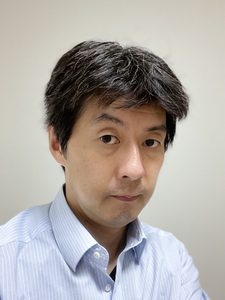
Manabu Umeda is a project researcher at Mobility Innovation Collaborative Research Organization, the University of Tokyo (UTmobI). He is also appointed as a Collaborative research coordinator in Mobility Innovation Alliance Japan since Jan. 2024.
He has many years of experience in safety performance development at an automotive company, where he has played a key role in developing vehicle safety technologies, and holds extensive expertise and deep insight in the field of automotive safety.
Since he joined the University of Tokyo in November 2019, he has contributed to promoting international collaboration activities regarding automated driving research fields. He was appointed as a Collaborative research coordinator in SIP-adus (the Cross-ministerial Strategic Innovation Promotion Program (SIP), Automated Driving for Universal Services) steering committee in Japan from Jan. 2020 to March 2023. And he is currently working for SIP, Development of Smart Mobility Platform to promote international collaboration. He serves as an Advisory Board Member for several European research projects, including the CCAMbassador, SENSEI, and Roads4All.
Speakers
Philippe Crist
Founder, Quo-plan, France

Philippe Crist is a recognised international mobility expert, writer and speaker. He is the founder of Quo-plan, a think tank focused on innovative, effective and human-centric policies. He retired from the International Transport Forum at the Organisation for Economic Development and Cooperation (OECD) where he last served as Senior Advisor for Innovation and Foresight. There, he coordinated innovation and foresight activities, served as the knowledge lead for resilience and adaptation, active mobility, urban mobility and sustainable transport , among other things. He was the principal author or co-author for over 40 OECD and ITF reports including “Mobility Data Governance: A Primer”, “AI for Transport Authorities: Principles and Practical Guidance”, “Skills Move us Forward: Transport Workforce Skills in the Age of AI”, "Governing Transport in the Algorithmic Age", "Mix and MaaS: Data Architecture for Mobility as a Service”, “Lightening the Load: Integrating Light Cargo Vehicles in Cities”, “Towards the Light: Effective Light Mobility Policies in Cities”, “Improving the Quality of Walking and Cycling in Cities”, “Cycling, Health and Safety”, “Streets that Fit: Re-allocating Space for Better Cities”, “Safer Micromobility”, “Greener Micromobility”, and "Good to Go? Assessing the Environmental Performance of New Mobility".
Ingrid Skogsmo
Senior research leader, VTI (Swedish National Road & Transport Research Institute), Sweden
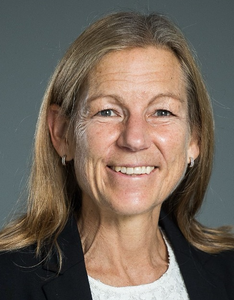
Ingrid Skogsmo is senior research leader for future mobility at VTI, the Swedish National Road and Transport Research Institute. She is member of the Executive Group of the CCAM Partnership (CCAM=Connected, Cooperative and Automated Mobility; www.ccam.eu ), where she leads the work on “Societal Aspects and People Needs”. Ingrid is the President of ECTRI (the European Conference of Transport Research Institutes, www.ectri.org ) and part of the executive management team of Drive Sweden (www.drivesweden.net ).
She is involved in several EU- and national projects related to CCAM, and is for example in the leadership team of the RESKILLING project (Research initiative for Enhancing and Adapting Workforce SKILLs for Implementing TraNsport Automation with Employment Growth) as well as the Societal Aspects Manager of the CCAMbassador project (supporting and engaging stakeholders, and strengthening cooperation between EU member states and international actors).
Her experience includes 25 years in the automotive industry, within positions such as vice president for Corporate Strategy at Volvo Group; Director, Volvo Cars Safety Center and manager positions at Ford Motor Company, Dearborn, USA. Ingrid has furthermore worked as seconded expert for automated driving at the European Commission DG RTD (directorate for research, innovation and development).
Ingrid has a Master of Science from Chalmers, Sweden, where she was awarded a honorary doctorate for pioneering safety work in 2008.
Kevin Romick
Executive Director, Next Generation Mobility, Inc., USA
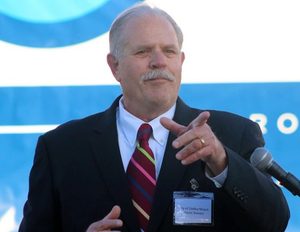
Kevin Romick serves as the Executive Director of Next Generation Mobility (NextGen), a leading operator in connected and autonomous vehicle (CAV) testing grounds. With a strong commitment to advancing transportation technologies, Kevin oversees the development of real-world testing environments that validate advanced driver-assistance systems (ADAS), vehicle-to-everything (V2X) communications, and fully autonomous systems.
Kevin brings a unique perspective to the ADAS and AV space through his deep experience bridging private technology (36 years Managing IT Ops at USS-Posco Industries) and 20 years in public and transportation spheres.
Kevin’s extensive experience in public service encompassed roles such as a Planning Commissioner – City of Oakley, City Council member – City of Oakley, Mayor – City of Oakley, Contra Costa Transportation Authority (CCTA) Commissioner, TRANSPLAN Committee Member, Eastern Contra Costa Transit Authority (ECCTA) Board of Directors, and San Joaquin Joint Powers Authority (SJJPA) Board of Directors. He maintains a strong collaborative relationship with CCTA, the owner of the license and GoMentum program. Through this partnership, Kevin has played a key role in aligning private-sector innovation with public-sector priorities, helping to position GoMentum Station as one of the premier CAV testbeds in the United States.